
Introduction
The South African Revenue Service (SARS) recently released a consultation paper on VAT modernisation for public comment. The proposed modernisation plan centres around an “ecosystem” of three digital concepts, namely e-Invoicing, an Interoperability Framework and e-Reporting. According to SARS, this ecosystem is intended to improve VAT-vendors’ experience, assist with efficient compliance, aid pre-filled VAT returns. In due course SARS anticipates that the new eco-system will create the basis for VAT auto-assessments, similar to the current Income Tax auto-assessment system.
Overview of the Current VAT Administration and Main Constraints
VAT is currently administered on a self-assessment basis via the invoice-credit method over the lifespan of the VAT system, which included VAT registration and invoicing, return submissions, payments, refunds, verification and audit of returns, dispute resolution and VAT deregistration.
As only certain aspects of the VAT system are currently digitised (for example filing and payment), the system is still exposed to risks associated with unstructured invoice data, fragmented processing systems and manual administration (i.e. the risk of errors, fraud and delays).
SARS is only privy to VAT information, via verifications and/or audits, and only after declarations have been submitted. Even then, SARS’s immediate access to transactional information is limited. This results in inefficiencies such as higher compliance costs, delays in refunds and an increase in compliance risks, to name a few.
Proposed New VAT Model – A Digital VAT Ecosystem
Background
According to SARS the proposed new digital VAT system will imbed VAT compliance into the normal operational flow of businesses, by facilitating the continuous sharing and reporting of vendors’ transactional data via a secure e-Invoicing, Interoperability Framework (IF) and e-Reporting electronic environment.
Combining transactional data with relevant third-party information, will enable SARS to build a reliable data environment, which can support AI-driven VAT assessments, taxpayer transparency and SARS interventions which more effectively target high-risk taxpayer behaviour, exceptions and anomalies.
Various crucial changes in business information processes will, however, be required to implement the proposed digital VAT model. This is illustrated in the table below:
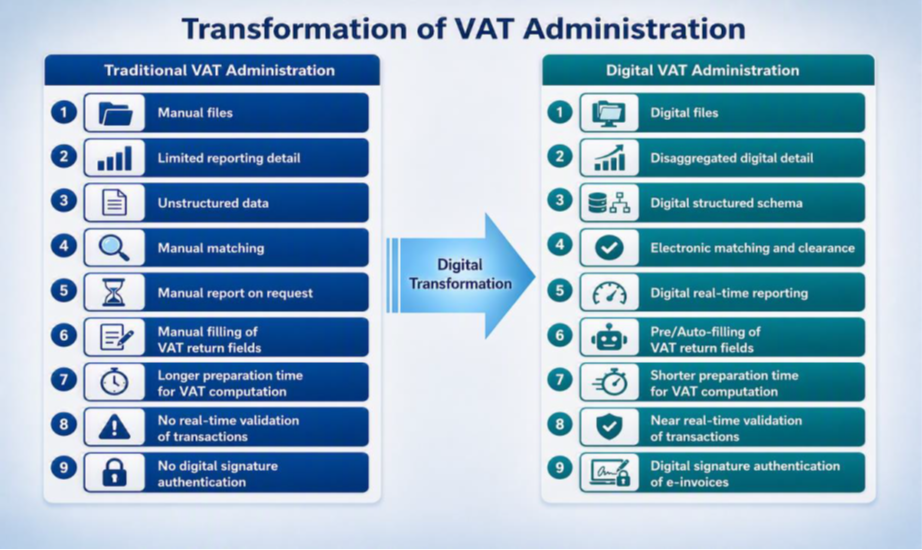
Table 1: Transformation of VAT Administration from Traditional to Digital
According to SARS the proposed model will ensure that VAT transaction data is transmitted in real-time between participating parties (suppliers, buyers, service providers and SARS). This, in turn, will facilitate the validation of data at the source and lead to automated VAT compliance where compliance is no longer enforced by retrospective verifications and audits, but rather by pre-emptive exception-based oversight. In such an environment VAT auto-assessment could then be implemented and taxpayers will have the option to confirm or amend such auto-assessments if any errors are detected.
SARS intends to build the modernised VAT administration model on three integrated pillars, namely e-Invoicing, an Interoperability Framework (IF) and e-Reporting. Each of these concepts are explained in more detail below.
What is an e-Invoice?
According to SARS an e-Invoice is a “structured, machine-readable tax invoice, using a prescribed data model, that is issued, transmitted, and received in a structured electronic format which allows for its seamless, automatic and electronic processing into accounting and ERP systems”.
SARS states that an e-Invoice is not simply a scanned image, PDF or emailed electronic document. Standardised data characteristics that enable validation, matching, accounting integration and VAT reporting, must be present for the document to constitute a proper e-Invoice.
SARS states that e-Invoices will also have to contain all the required information in terms of accounting, commercial, tax, and other relevant legislation and regulations, to be considered an original document in terms of the new digitalised VAT system.
It is envisaged that this original e-Invoice/electronic message will be equivalent to a traditional tax invoice in terms of section 20(4) or 20(5) of the VAT Act, as well as a supporting accounting documents for income tax purposes.
What is an Interoperability Framework (IF)?
SARS describes an IF in the following technical terms in its consultation paper, namely “a decentralised message exchange via a network of service providers, similar to those offering internet or email access.”
SARS also states that an IF integrates the participating parties’ IT systems to enable the delivery, clearance, validation, and e-Reporting of an e-Invoice, supporting data and messages in a standardised and compliant form between said parties.
What is e-Reporting?
It is a digital system that automatically sends e-Invoice data to a tax authority like SARS. Different e-Reporting models exist, such as the continuous transaction controls (CTC) method and the post-audit method, where different models may include different information exchange and clearance mechanisms.
Final remarks
It is clear from SARS’s consultation paper that profound IT driven changes are on the horizon for the South African VAT system. VAT vendors should take note, as this will impact all aspects of the VAT system as we currently know it, once implemented. Hopefully, the digital automation and integration of the different aspects of the VAT system, which currently is still fragmented, will simplify administration, ensure more accurate data and VAT reporting and lead to considerable time-savings for VAT vendors, accountants and tax practitioners.
If you have any enquiries, please contact Petri Westraadt at pwestraadt@fhbc.co.za
Source Reference: